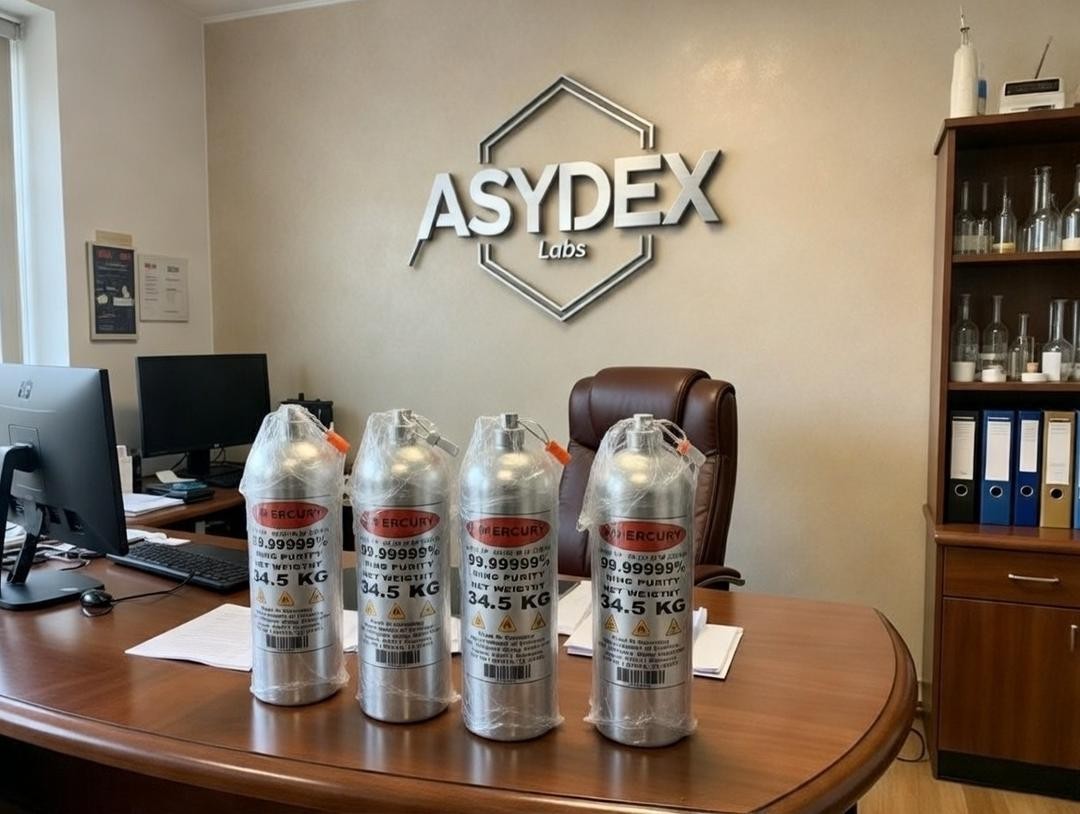
Choosing a chemical supplier requires careful checks, clear records, and reliable evidence. Buyers should never rely on bold claims or impressive product labels alone. When evaluating a red mercury chemical supplier, the key question is whether independent testing can verify the material’s identity, composition, and safety. A laboratory report may look convincing, but buyers must understand what it proves and what it cannot confirm.
What Is Red Mercury, and Why Do Supplier Claims Matter?
The term “red mercury” appears in online listings and supplier claims, often with descriptions of unusual properties or high commercial value. However, credible scientific evidence does not establish red mercury as a recognized, unique substance with the extraordinary properties sometimes advertised.
This matters because some sellers use vague descriptions, unsupported claims, or fabricated documents to attract buyers. A product’s red color, sealed container, or high asking price does not prove its identity or value.
Before considering any purchase, buyers should ask:
- What exact chemical does the seller claim to supply?
- Does the product have a clear chemical name and composition?
- Can an independent laboratory verify the material?
- Does the seller provide traceable documentation?
Clear answers help buyers separate verifiable information from marketing claims.
Can a Laboratory Report Prove Red Mercury Is Genuine?
A laboratory report can provide useful evidence about a sample. However, it cannot prove a claim that science has not established. If a supplier describes a product as a special form of red mercury, the report must identify what the material actually contains.
A trustworthy report should include several details:
- Sample identification: A unique reference or sample number that connects the report to the tested material.
- Testing methods: The analytical techniques used to examine the sample.
- Measured results: Findings that describe the material’s composition or relevant properties.
- Laboratory details: The laboratory’s name, address, and contact information.
- Report date: The date of testing and the report’s issue date.
- Authorized approval: The name or signature of the person who approved the findings, where applicable.
These details make it easier to verify the report with the laboratory. Still, a genuine report only supports the findings for the sample that the laboratory tested. It does not automatically prove that every container in a shipment has the same contents.
How to Check Whether Lab Proof Is Trustworthy
Buyers should verify laboratory documents instead of accepting them at face value. A careful review can reveal missing details, altered records, or claims that go beyond the test results.
1. Contact the Laboratory Directly
Use independently verified contact details to reach the laboratory. Ask whether it issued the report and whether the reference number matches its records. Do not rely only on phone numbers or email addresses printed on a document supplied by the seller.
2. Check the Laboratory’s Accreditation
Look for a laboratory accredited to ISO/IEC 17025 for the relevant testing scope. Accreditation can support confidence in a laboratory’s technical competence, but it does not validate every claim made by a supplier. Confirm that the accreditation covers the specific type of analysis.
3. Read the Actual Test Results
A certificate may contain technical terms without proving the seller’s main claim. Check the identified substances, reported concentrations, testing limits, and any stated uncertainty. Ask a qualified analytical chemist to explain unclear results.
4. Match the Report to the Product
Confirm that the sample description, batch number, product label, and shipment records match. A report for an unrelated sample offers little evidence about the material being sold.
5. Watch for Warning Signs
Be cautious if a seller:
- Refuses independent verification.
- Promises extraordinary properties without credible evidence.
- Provides a certificate with missing laboratory details.
- Pressures buyers to pay before answering basic questions.
- Claims that confidentiality prevents all meaningful verification.
A supplier’s confidence does not replace independent evidence.
What Documents Should a Responsible Chemical Supplier Provide?
For recognized industrial chemicals, buyers should expect clear and consistent documentation. Depending on the substance and transaction, useful records may include:
- A product specification identifying the chemical and its grade.
- A certificate of analysis for the relevant batch.
- A current safety data sheet (SDS).
- Traceable batch and shipment records.
- Applicable transport, storage, and regulatory documents.
Each document serves a different purpose. A certificate of analysis reports test results, while an SDS explains hazards, handling precautions, storage needs, and emergency measures. Neither document alone proves that a material has extraordinary or unverified properties.
A responsible red mercury chemical supplier should explain the product’s recognized chemical identity and provide evidence that buyers can independently check. If the seller cannot identify the material clearly, buyers should not treat a certificate as proof of authenticity.
Why Buyers Should Be Careful With Red Mercury Offers
Unverified chemical listings can expose buyers to financial loss, unsafe materials, and legal or shipping problems. A red-colored substance may contain an ordinary compound, a mixture, or an unidentified material. Appearance alone cannot establish its chemical identity.
Do not open, heat, mix, or handle an unknown substance to test a seller’s claims. If you already have an unidentified chemical, keep people away from it and seek advice from qualified hazardous-material professionals or the appropriate local authorities. Follow applicable safety rules and avoid sending unknown materials through ordinary shipping channels.
The safest approach is to buy only recognized chemicals for legitimate uses from suppliers that provide verifiable documentation and follow applicable regulations.
Final Thoughts
Can a supplier show trusted lab proof for red mercury? A supplier can present a laboratory report, but the report must stand up to independent checks and support the specific claims made. No certificate can turn an unsupported scientific claim into an established fact.
Before working with a red mercury chemical supplier, verify the laboratory, review the testing scope, match the sample to the shipment, and confirm the material’s recognized identity. If the seller avoids these checks or promises extraordinary properties without reliable evidence, walk away. Independent verification and chemical safety should always come before price or persuasion.
FAQs
1. Can a lab report prove that red mercury is genuine?
A lab report can identify the substances found in a tested sample. However, it cannot establish red mercury as a special substance with extraordinary properties when credible scientific evidence does not support those claims.
2. How can I verify a chemical supplier’s laboratory certificate?
Contact the issuing laboratory through independently verified contact details. Confirm the report number, sample identity, testing methods, and results. Also check whether the laboratory has relevant accreditation.
3. Does ISO/IEC 17025 accreditation guarantee that a chemical is authentic?
No. ISO/IEC 17025 accreditation supports a laboratory’s competence within its approved testing scope. It does not guarantee a supplier’s claims or prove that a tested sample matches an entire shipment.
4. What documents should I request from a chemical supplier?
For a recognized chemical, request a product specification, batch-specific certificate of analysis, safety data sheet, and traceable shipment records. Additional documents may apply based on the chemical, intended use, and local regulations.
5. Should I buy red mercury if the supplier provides a certificate?
Not based on the certificate alone. Verify the report independently and confirm the material’s recognized chemical identity. Avoid offers that rely on extraordinary claims, unclear documentation, or pressure to pay before verification.

Need Industrial Chemical Supply?
AsydeX Labs supplies high-purity chemicals to mining operations worldwide. ISO 9001:2015 certified.
Request a Quote →