
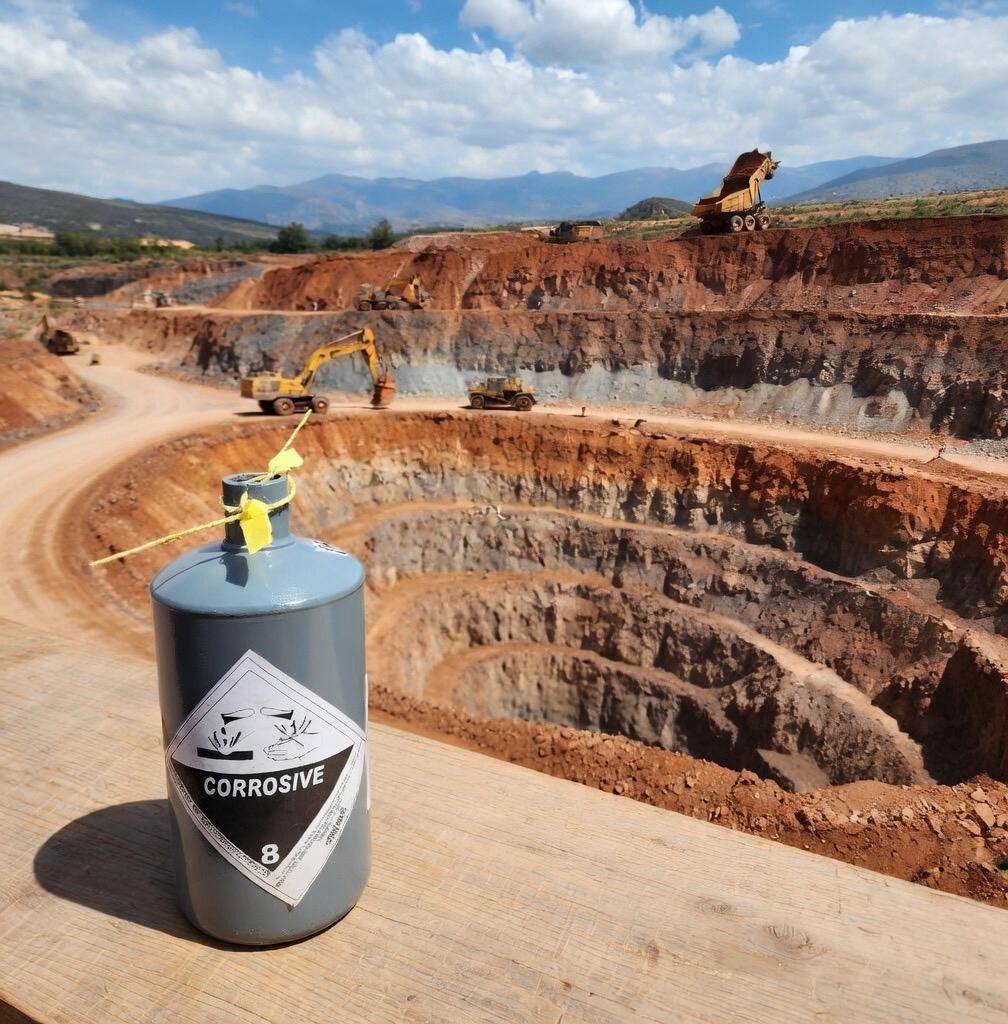
Gold recovery through chemical leaching depends on several factors, and pH stands among the most important. The right pH helps maintain effective chemical reactions, improve gold dissolution, and support better recovery. Understanding this balance helps mining operations use gold extraction chemical solutions more efficiently while reducing chemical waste and process problems.
Why Does pH Matter in Gold Leaching?
Chemical leaching uses a solution to dissolve gold from ore so operators can recover it later. During this process, pH affects how chemicals react with gold, minerals, and other substances in the slurry.
A suitable pH can:
- Support stable chemical reactions
- Improve gold dissolution
- Reduce unwanted reactions with other minerals
- Help maintain consistent leaching conditions
- Improve overall recovery efficiency
- Reduce unnecessary chemical consumption
If the pH moves too far from the desired range, the leaching process can become less effective. This can lead to slower gold dissolution and lower recovery.
How Low pH Can Affect Gold Recovery
A low pH means the leaching solution contains more acidic conditions. Depending on the ore and chemical system, excessive acidity can create several challenges.
Acidic conditions may increase the dissolution of unwanted minerals. These reactions can consume chemicals that should support gold recovery. They can also introduce impurities into the leach solution.
Operators should therefore monitor pH closely instead of assuming that a more acidic solution will always improve extraction.
The ideal pH depends on the ore composition, leaching chemistry, temperature, and process design. Operators should select conditions based on testing rather than using one fixed value for every ore type.
How High pH Can Affect the Process
A high pH creates more alkaline conditions. Some gold leaching systems require alkaline conditions because they help stabilize the chemical environment and control unwanted reactions.
However, excessively high pH can also create problems. It may change chemical behavior, increase reagent requirements, or slow the desired reaction.
This is why operators need to maintain a controlled pH instead of continuously increasing alkalinity.
For gold extraction chemical solutions, proper pH control helps create a more predictable environment for gold dissolution. Regular measurements can also help operators identify changes before they significantly affect recovery.
The Connection Between pH and Chemical Consumption
pH does not work alone. It interacts with the chemicals used during the leaching process.
When pH changes, the chemical form, stability, or activity of certain compounds may also change. As a result, the process may require more reagent to achieve the same gold recovery.
Poor pH control can therefore increase operating costs.
Maintaining the appropriate range can help operators:
- Use chemicals more efficiently.
- Limit unnecessary reagent consumption.
- Maintain stable leaching conditions.
- Reduce process fluctuations.
- Improve recovery consistency.
This makes pH monitoring an important part of both technical control and cost management.
How Ore Composition Changes the Ideal pH
Every ore behaves differently. Some ores contain minerals that react strongly with the leaching solution. Others may contain substances that consume reagents or interfere with gold dissolution.
Because of this, operators should not select a pH target based only on general industry recommendations.
Laboratory testing can help determine how a specific ore responds to different pH conditions. Test work can compare gold recovery, reagent use, leaching time, and solution chemistry across different pH levels.
This approach helps identify a practical operating range for the particular ore.
Better pH Control Means More Consistent Recovery
Consistent pH control can make the leaching process easier to manage. Operators can track pH throughout the process and adjust conditions when necessary.
Useful monitoring practices include:
- Measure pH at regular intervals.
- Check pH after major chemical additions.
- Use properly calibrated measuring equipment.
- Compare pH readings with gold recovery data.
- Investigate sudden pH changes quickly.
- Test ore samples before large-scale processing.
These steps can help identify process changes early and support more reliable results.
Choosing the Right Chemical Leaching Approach
The right chemical approach depends on ore characteristics, recovery targets, environmental requirements, and processing conditions. A suitable solution should work effectively within the required chemical environment.
High-quality gold extraction should support controlled processing rather than relying on excessive reagent use. Operators should evaluate compatibility with the ore and establish suitable process conditions through controlled testing.
Professional technical guidance can also help identify potential chemical interactions and improve process efficiency.
Final Thoughts
pH plays a major role in chemical gold leaching. Too little or too much control can affect chemical reactions, reagent consumption, gold dissolution, and final recovery. Operators can improve process consistency by monitoring pH, understanding ore behavior, and adjusting conditions based on reliable test results. Using gold extraction chemical solutions within a carefully controlled process can support efficient and predictable gold recovery.
FAQs
1. What is the ideal pH for gold leaching?
There is no single ideal pH for every gold ore or leaching system. The correct range depends on the chemical process, ore composition, and operating conditions. Laboratory testing can help determine the most suitable range.
2. Can pH changes reduce gold recovery?
Yes. A significant pH change can alter chemical reactions and increase unwanted mineral reactions. These changes may reduce gold dissolution or increase reagent consumption, which can lower overall recovery.
3. How often should operators check pH during leaching?
Operators should check pH regularly throughout the leaching process. The exact frequency depends on the process design and how quickly pH changes. More frequent checks can help maintain stable conditions.
4. Does higher pH always improve gold recovery?
No. Increasing pH does not automatically increase gold recovery. Excessively high pH can change chemical behavior and increase reagent requirements. Operators should maintain a tested operating range instead.
5. Why does the same leaching process perform differently with different ores?
Different ores contain different minerals and chemical compounds. These materials can consume reagents or interfere with gold dissolution. Ore testing helps identify how each material responds to the selected leaching conditions.
6. Can better pH control reduce chemical costs?
Yes. Proper pH control can help prevent unnecessary chemical consumption and reduce process fluctuations. A stable chemical environment can also support more consistent gold recovery and better use of processing reagents.

Need Industrial Chemical Supply?
AsydeX Labs supplies high-purity chemicals to mining operations worldwide. ISO 9001:2015 certified.
Request a Quote →