
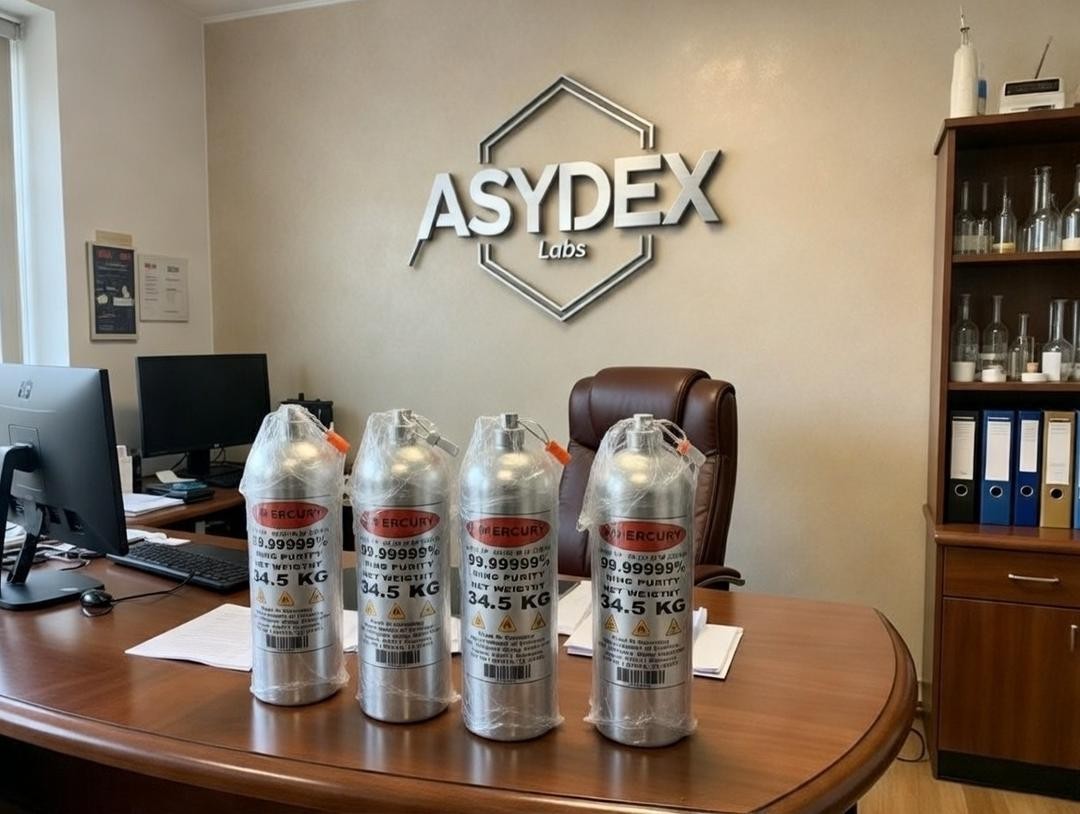
Mercury has long played a role in science, industry, and mining, while “red mercury” often appears in claims about unusual materials and special uses. If you are researching red mercury for gold extraction, it is important to separate verified facts about elemental mercury from unsupported claims surrounding so-called red mercury.
What Is Mercury?
Mercury is a naturally occurring chemical element with the symbol Hg and atomic number 80. It has a distinctive silver appearance and remains liquid at room temperature. Mercury can form different chemical compounds, but elemental mercury itself has well-known physical and chemical properties.
Historically, industries have used mercury in several applications, including scientific instruments, electrical equipment, and some industrial processes. Its use requires strict safety controls because mercury and many of its compounds can harm people and the environment.
What Is Red Mercury?
“Red mercury” is a term surrounded by controversy. Various sources have described it as a mysterious mercury-based substance with unusual properties or specialized applications. However, no reliable scientific evidence confirms the existence of a unique substance called “red mercury” with the extraordinary properties often claimed online.
The term may refer to different things in different contexts. Some products marketed under this name may simply contain other red-colored mercury compounds or unrelated substances.
This creates an important distinction:
- Mercury is a recognized chemical element with established properties.
- Red mercury is not recognized as a unique, proven form of elemental mercury with extraordinary capabilities.
- Claims about secret, highly powerful, or special versions of red mercury require strong scientific evidence.
- Product descriptions alone cannot establish a material’s identity or performance.
Red Mercury vs Mercury: Key Differences
The biggest difference involves scientific verification. Mercury has a clearly established identity, chemical symbol, atomic number, physical characteristics, and documented chemical behavior.
By contrast, “red mercury” lacks a universally accepted chemical definition. Different claims may describe completely different materials. Therefore, buyers and researchers should avoid assuming that every material labeled red mercury has the same composition.
When comparing the two, consider these factors:
- Chemical identity: Mercury has a defined elemental identity. Red mercury does not have one universally accepted identity.
- Scientific evidence: Mercury has extensive scientific documentation. Extraordinary red mercury claims lack comparable evidence.
- Appearance: Elemental mercury has a metallic silver appearance. A red material does not automatically represent a special form of mercury.
- Applications: Mercury has documented industrial and scientific uses, while many claimed red mercury applications remain unsupported.
- Safety: Mercury exposure can create serious health and environmental risks, regardless of marketing claims.
Can Red Mercury Be Used for Gold Extraction?
Gold extraction is an area where online claims about unusual substances can create confusion. Some sellers promote red mercury for gold extraction and suggest that it can improve gold recovery or offer special extraction capabilities.
However, such claims should not be accepted without credible technical evidence. A material marketed as red mercury does not automatically have a proven role in gold extraction. Anyone evaluating a mining chemical should verify its composition, safety documentation, laboratory data, and intended application before purchasing or using it.
For legitimate gold-processing operations, the choice of reagents depends on the ore type, recovery method, processing conditions, environmental requirements, and applicable regulations.
How to Evaluate Claims About Red Mercury
Before trusting a claim, look beyond promotional language. A reliable evaluation should include:
- A clear chemical name and composition
- Independent laboratory testing
- A suitable safety data sheet
- Verified technical specifications
- Evidence from credible scientific or industrial sources
- Proper information about handling and storage
- Compliance with local regulations
These checks can help distinguish a genuine chemical product from a misleading or unsupported claim.
Why Scientific Verification Matters
Chemical materials can look similar while behaving very differently. Color, packaging, labels, or seller descriptions cannot prove chemical identity. Laboratory analysis provides a much stronger basis for determining what a substance actually contains.
This matters especially in mining, where an unsuitable reagent can waste money, damage equipment, reduce recovery, or create unnecessary environmental risks. Researching red mercury for gold extraction should therefore begin with verified chemical information rather than unproven claims.
Final Thoughts
Mercury is a well-defined chemical element with established properties and documented uses. “Red mercury,” however, does not have a single scientifically accepted identity that supports the extraordinary claims often associated with it. If you encounter red mercury for gold extraction, verify the product carefully before considering its use. Reliable chemical information, laboratory testing, safety documentation, and regulatory compliance should always guide purchasing and processing decisions.
FAQs
1. Is red mercury the same as regular mercury?
No. Regular mercury refers to the recognized chemical element Hg. “Red mercury” does not have one universally accepted scientific identity and may describe different substances depending on the source.
2. Does red mercury really extract gold?
There is no reliable scientific basis for assuming that a material marketed as red mercury provides a special gold-extraction process. Verify technical claims through credible laboratory and industry evidence.
3. Why is mercury associated with gold extraction?
Mercury has historically been used in some forms of gold recovery because it can form an amalgam with gold. However, mercury use can create serious health and environmental hazards and is restricted or regulated in many places.
4. How can I verify a product sold as red mercury?
Ask for its exact chemical composition, safety data sheet, laboratory analysis, and technical documentation. Independent testing can provide stronger evidence than a seller’s description.
5. Is red mercury dangerous?
The risk depends on the actual substance and its chemical composition. Since mercury and many mercury compounds can pose serious hazards, treat unknown mercury-labeled materials with caution and avoid unverified handling.
6. Should I buy red mercury for mining?
Do not purchase a product solely because a seller claims it offers special mining or gold-recovery benefits. Confirm its identity, performance data, safety requirements, and legal status before making a purchasing decision.

Need Industrial Chemical Supply?
AsydeX Labs supplies high-purity chemicals to mining operations worldwide. ISO 9001:2015 certified.
Request a Quote →